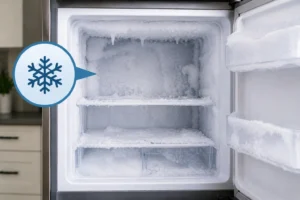
A little frost on the back wall of a freezer is normal. Frost that keeps coming back within days of being scraped off, builds up thick enough to crowd out storage space, or shows up along with a warm refrigerator section is a different story. That pattern usually points to something letting warm, moist air into the freezer more often than it should, or a defrost system that isn’t clearing frost the way it’s designed to.
Quick Answer
Fast frost buildup is usually caused by warm, humid air getting into the freezer more than it should, either from a door that isn’t sealing properly, frequent or long door openings, or a defrost system that isn’t clearing frost on schedule. Less commonly, it can point to a failing door gasket, a blocked drain, or a temperature control issue. The exact cause depends on where the frost is concentrated and whether it comes back quickly after being removed.
Most likely causes, in general order of how often they show up:
- Door gasket is not sealing completely, letting warm air in continuously
- Door left open too long or too often, or not closing fully after use
- Defrost heater, thermostat, or timer not completing its cycle
- Warm or humid air is introduced from frequent grocery loading or a nearby heat source
- Blocked or frozen condensate drain, sending melted frost back into the compartment as ice
- Temperature set too cold, causing excess moisture to freeze on contact
Most Likely Causes
1. Door Gasket Not Sealing Properly
The door gasket is the rubber seal around the freezer door that keeps outside air out. When it’s torn, stretched, or coated with food residue, it doesn’t seal fully, which lets warm, humid room air leak in continuously. That moisture hits the cold interior surfaces and freezes, often concentrated near the door or along the edges rather than spread evenly across the back wall.
A gasket problem tends to produce frost that returns quickly after you clear it, sometimes within a day or two, because the source of moisture never stops.
What it looks like: Frost concentrated near the door seams, or a door that feels like it swings open too easily instead of resisting slightly as the seal releases.
Can you check it yourself: Yes. Closing the door on a piece of paper and pulling it out is a simple way to test seal strength around the perimeter. If the paper slides out with little resistance in some spots, that section of the gasket likely isn’t sealing.
2. Door Not Closing Fully or Left Open Too Often
Even a good gasket can’t do its job if the door doesn’t latch flush, or if it’s opened frequently for long periods while someone decides what to grab. Every time the door opens, warm room air enters, and the moisture in that air condenses and freezes once the door closes and the compartment cools back down.
This is one of the most common and most overlooked causes, because the frost buildup can look identical to a gasket problem, but the fix is behavioral rather than mechanical.
What it looks like: General frost buildup that seems to track with how often the freezer gets used, rather than concentrating in one spot.
Can you check it yourself: Yes. Checking that the door closes fully on its own from a few inches open, without needing to be pushed hard, is a simple and safe test.
3. Defrost System Not Completing Its Cycle
Most freezers run on an automatic defrost cycle: a defrost heater periodically melts the thin layer of frost that naturally forms on the evaporator coil, a defrost thermostat or thermistor tells the system when that frost has cleared, and a timer or control board determines when the cycle runs. If any of these components isn’t working correctly, frost keeps accumulating on the evaporator coil instead of being cleared, and it can eventually build up enough to block airflow into the freezer compartment.
This is different from surface frost caused by air leaks. Defrost system frost tends to build up behind the interior back panel, on the coil itself, and often comes with reduced cooling or ice forming in unusual patterns as airflow gets restricted.
What it looks like: Frost buildup that keeps returning no matter how well the door seals, sometimes paired with the freezer struggling to stay cold or making unusual fan noise as ice restricts airflow. Can you check it yourself: Not directly. The evaporator coil is typically behind an interior panel, and testing the defrost heater, thermostat, and timer requires electrical testing equipment.
4. Warm or Humid Air From Usage Patterns
Loading large amounts of room-temperature groceries at once, or storing the freezer near a heat source like a dishwasher or direct sunlight through a nearby window, introduces more heat and humidity than the unit typically has to manage. The compressor and defrost system are designed to handle normal usage, not repeated large temperature swings, so frost can build up faster than the defrost cycle can keep up with.
What it looks like: Frost buildup that seems to spike after large grocery trips or noticeably warm days, rather than being constant.
Can you check it yourself: Yes. This is more about noticing a pattern than performing a technical check. If frost gets worse after specific triggers, that’s a useful clue.
5. Blocked or Frozen Condensate Drain
During each defrost cycle, melted frost is supposed to drain out of the freezer compartment through a small drain channel and into a pan near the compressor, where it evaporates. If that drain gets blocked with food debris or freezes over, the melted frost has nowhere to go and can refreeze inside the compartment instead, sometimes appearing as an ice buildup on the floor of the freezer rather than frost on the walls.
What it looks like: Ice forming on the freezer floor or at the base of the back wall, rather than a general frost coating.
Can you check it yourself: Some models have an accessible drain opening inside the freezer that can be checked for visible blockage, but many drains run behind interior panels and require disassembly to access safely.
6. Temperature Set Too Cold
Setting the freezer significantly colder than needed doesn’t just use more energy. It can also cause any moisture that does enter the compartment to freeze more readily and in larger amounts, since colder surfaces pull moisture out of the air faster. This isn’t usually the sole cause of a frost problem, but it can make an existing air leak or defrost issue look worse than it is.
What it looks like: Frost buildup that improves somewhat, but doesn’t fully resolve, after the temperature is adjusted to the manufacturer’s recommended setting.
Can you check it yourself: Yes. Checking the current temperature setting against the manufacturer’s recommended range is a simple, safe first step.
How to Narrow Down the Problem
Since several different issues can produce frost that looks similar, where the frost concentrates and how quickly it returns after being cleared are more useful clues than the frost itself:
- If frost is concentrated near the door seams and returns within a day or two of clearing it: this points toward a gasket sealing issue.
- If frost is spread generally throughout the compartment and correlates with how often the door is opened: this points toward usage patterns or a door not latching fully.
- If frost keeps returning no matter how well the door seals, especially with reduced cooling or restricted airflow: this points toward the defrost system.
- If ice is forming on the freezer floor rather than as frost on the walls: this points toward a blocked or frozen condensate drain.
- If frost buildup is paired with the refrigerator section running warm: this suggests a shared airflow or defrost issue affecting both compartments, since many refrigerator-freezer units use one evaporator and fan system to cool both sides.
- If the problem started right after the unit was defrosted and cleaned: check whether the door was fully closed and sealed correctly during reassembly, since a gasket that wasn’t seated properly is an easy thing to miss.
None of these patterns confirms the cause on its own, but they tell you which system to focus on, which makes homeowner checks and any professional diagnosis more efficient.
Safe Checks to Try Before Scheduling Repair
- Run the paper test on the door gasket. Close the door on a strip of paper at several points around the perimeter and pull gently. Resistance means a good seal at that spot; the paper sliding out easily means air is likely leaking in there.
- Clean the gasket surface. Food residue and grime can prevent an otherwise intact gasket from sealing fully. Wiping it down with mild soap and water is a safe, simple step before assuming the gasket needs replacing.
- Check that the door closes and latches on its own. Open it a few inches and let go. It should swing shut without needing to be pushed.
- Confirm the temperature setting matches the manufacturer’s recommendation. This is usually listed inside the compartment or in the owner’s manual.
- Look for visible ice on the freezer floor. This can indicate a drain issue, though confirming and clearing a blocked drain often requires accessing panels that aren’t meant for regular homeowner removal.
- Stop here if the frost is concentrated on the interior back panel, if you need to remove panels to inspect the coil or drain, or if the issue continues after the checks above. At that point, further diagnosis requires a technician.
What Homeowners Commonly Misdiagnose
The most common mistake is assuming that clearing the frost solves the problem. Manually removing frost addresses the symptom, not the source, so if the gasket, defrost system, or drain issue causing it isn’t fixed, the frost simply returns on its own schedule.
The second common mistake is assuming a door gasket issue when the actual cause is the defrost system, or the reverse. Both can produce frost that looks similar at a glance, but a gasket issue typically responds to gasket cleaning or replacement, while a defrost system issue won’t improve, no matter how well the door seals, since the source of the excess frost is inside the system rather than coming from outside air.
What to Check Before Replacing Parts
Because a door gasket and a defrost system issue can produce overlapping symptoms, replacing a gasket when the actual problem is the defrost heater or thermostat wastes money without solving the frost buildup. Before replacing any part, it’s worth confirming the pattern of frost buildup against the diagnostic clues above, and where the cause isn’t clear, having a technician verify which system is responsible before ordering parts.
When to Stop Using the Appliance
Excessive frost buildup on its own generally isn’t a safety hazard, but a few related situations are worth acting on quickly:
- If frost or ice buildup is severe enough to block the freezer door from closing fully, food inside can warm enough to raise food-safety concerns.
- If the refrigerator section is also warming up along with the frost problem, food stored there is at a similar risk and shouldn’t be assumed safe just because it still feels cool.
- If you notice water pooling on the floor near the unit, especially near any electrical outlet, avoid stepping in it and unplug the appliance only if it’s safe to reach the outlet without contacting the water.
When Professional Diagnosis Makes Sense
A technician can test the defrost heater, defrost thermostat, and timer or control board directly, since these components require electrical testing to confirm whether they’re operating correctly. They can also access the evaporator coil and drain system safely to check for ice blockage that isn’t visible from inside the compartment, and assess whether the gasket needs cleaning, adjustment, or replacement.
This is the right next step once the basic homeowner checks above don’t identify a clear cause, or if frost keeps returning despite a gasket that passes the paper test and a door that closes properly. Guessing at a part replacement without confirming the actual source often means paying for a part that doesn’t fix the underlying issue.
If frost buildup is happening alongside a refrigerator that’s not staying cold, our guide on why a refrigerator might not be cooling while the freezer still works covers the shared airflow and defrost components that can affect both compartments at once.
For hands-on diagnosis of the defrost system, gasket, or drain, refrigerator and freezer repair in Knoxville covers exactly this kind of troubleshooting.
Repair or Replace?
A gasket replacement or a defrost system repair, such as a new defrost heater or thermostat, is typically a moderate, worthwhile repair regardless of the unit’s age, since these are common, well-understood failures. A control board issue affecting the defrost cycle is a bigger factor in the decision, since control board diagnosis and replacement tend to cost more relative to the value of an older unit.
Worth weighing before deciding: the age of the freezer, whether it’s needed other repairs recently, whether replacement parts are still available for the model, and how the repair estimate compares to the cost of a comparable replacement unit. A technician can lay out these factors accurately once the actual cause of the frost buildup is confirmed.
Preventing frost problems before they start often comes down to routine care. Our guide on how to maintain your refrigerator to avoid costly repairs covers gasket care and other habits that reduce strain on the defrost system over time.
Frequently Asked Questions
Why does frost keep coming back in my freezer after I scrape it off? Scraping frost removes the symptom but not the source. If a door gasket isn’t sealing, the door isn’t closing fully, or the defrost system isn’t completing its cycle, moisture keeps entering or accumulating the same way it did before, so the frost returns on a similar timeline.
Why is my freezer frosting up while the refrigerator is warm? Many refrigerator-freezer units share one evaporator coil and fan system to cool both compartments. If that shared system is blocked by frost buildup or not defrosting properly, airflow to the refrigerator side can be restricted at the same time, causing both symptoms together.
Is frost buildup in a freezer normal? A thin layer of frost on the back or upper wall that’s easy to wipe away is typically normal, especially in freezers without a fully automatic defrost cycle. Frost that’s thick, spreads across multiple surfaces, or returns within a day or two of being cleared usually points to a specific cause rather than normal operation.
Can a bad door gasket really cause that much frost? Yes. A gasket that isn’t sealing lets warm, humid room air into the freezer continuously rather than only when the door opens, which gives moisture a constant source to freeze from and can produce noticeably faster frost buildup than normal door use alone.
Why is my freezer icing up after I already defrosted it? If the underlying cause, such as a gasket that isn’t sealing or a defrost heater that isn’t cycling correctly, wasn’t addressed during the defrost, ice and frost typically return once the compartment cools back down and moisture starts accumulating again.
Does frost buildup mean my freezer’s defrost system is broken? Not necessarily. Frost concentrated near the door often points toward a sealing issue rather than the defrost system itself. Frost that keeps returning regardless of door sealing, especially alongside reduced cooling, is a stronger indicator that the defrost heater, thermostat, or timer isn’t functioning correctly.
Getting It Diagnosed in Knoxville
Frost that keeps coming back despite a clean gasket and a properly closing door usually points to something inside the defrost system or drain that needs direct testing to confirm. The checks above (the paper test on the gasket, confirming the door latches on its own, and checking the temperature setting) can rule out the simpler causes. If frost keeps returning after that, or shows up alongside reduced cooling or ice on the freezer floor, that’s the point where diagnostic tools become necessary.
Knoxville Appliance Pros diagnoses and repairs freezer frost and defrost issues for homeowners throughout Downtown Knoxville, Farragut, Bearden, Cedar Bluff, Fountain City, Halls, Karns, West Knoxville, North Knoxville, and South Knoxville. If your freezer keeps frosting up despite the basic checks above, we can test the defrost heater, thermostat, gasket seal, and drain system to identify exactly what’s letting the frost build up before recommending a repair.
Knoxville Appliance Pros Phone: (865) 249-0996 Service area: Knoxville, TN and surrounding communities