When your freezer is working normally, but the refrigerator section is warm, it feels confusing and frustrating. Food starts spoiling, drinks don’t chill, and you’re left wondering if the whole appliance is failing.
For homeowners in Knoxville, this is one of the most common refrigerator problems—especially during hot summer months when appliances are already under extra load.
The good news is that this issue does not always mean a major failure. In many cases, it comes from airflow problems, simple mechanical faults, or maintenance issues that can be fixed early.
If the problem continues, professional refrigerator repair in Knoxville may be needed to prevent food loss and further damage.
How a Refrigerator Actually Cools
To understand the problem, you need to know one basic thing:
- The freezer produces cold air first
- That cold air is then sent to the refrigerator section
Both compartments depend on the same cooling system.
So when:
- The freezer works
- But the fridge is warm
It usually means airflow is blocked or circulation is failing.
Main Reasons Your Freezer Works but Refrigerator Is Warm
1. Blocked Air Vents Between Freezer and Fridge
Cold air flows from the freezer into the refrigerator through small vents.
If those vents are blocked, the fridge stops cooling.
Common causes:
- Food containers placed in front of vents
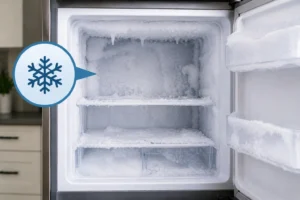
- Ice buildup blocking airflow
- Overpacked shelves
What you’ll notice:
- The freezer stays very cold
- The refrigerator feels warm
- Uneven cooling inside the fridge
This is one of the easiest problems to fix, but it is often overlooked.
2. Frozen Evaporator Coils (Very Common)
Inside the freezer, evaporator coils create cold air.
If they freeze over, airflow stops completely.
This happens due to:
- Faulty defrost heater
- Defrost timer failure
- Sensor issues
- Long door openings
Signs:
- Frost on the freezer back wall
- Weak airflow in the fridge
- Cooling drops suddenly
3. Faulty Evaporator Fan Motor
The evaporator fan pushes cold air into the refrigerator section.
If it stops working, the freezer stays cold, but the fridge warms up.
You may notice:
- No air movement from vents
- Strange buzzing or clicking
- Rising fridge temperature
4. Damaged Door Seals (Gaskets)
Worn door seals allow cold air to escape.
This makes the refrigerator struggle to maintain temperature.
If ignored, it forces the system to overwork and increases energy usage.
You can learn more about full-system refrigerator issues on our refrigerator freezer repair in Knoxville TN service page.
5. Dirty Condenser Coils
Condenser coils release heat from the refrigerator system.
When dirty:
- Cooling efficiency drops
- Compressor runs longer
- Fridge performance weakens
Regular maintenance can prevent this issue. According to the U.S. Department of Energy refrigerator efficiency guide, dirty or inefficient cooling systems significantly increase energy use.
6. Incorrect Temperature Settings
Sometimes the issue is simple.
- Fridge set too warm
- Freezer set correctly
- Settings accidentally changed
Always check this first before assuming a fault.
7. Damper Control Failure
The damper controls how much cold air enters the fridge.
If it sticks closed:
- Freezer stays cold
- The fridge warms up
If it sticks open:
- The fridge may freeze items
This small part often causes major confusion.
8. Compressor or Refrigerant Issues
If everything else checks out, the issue may be deeper.
Possible causes:
- Weak compressor
- Refrigerant leak
- Sealed system failure
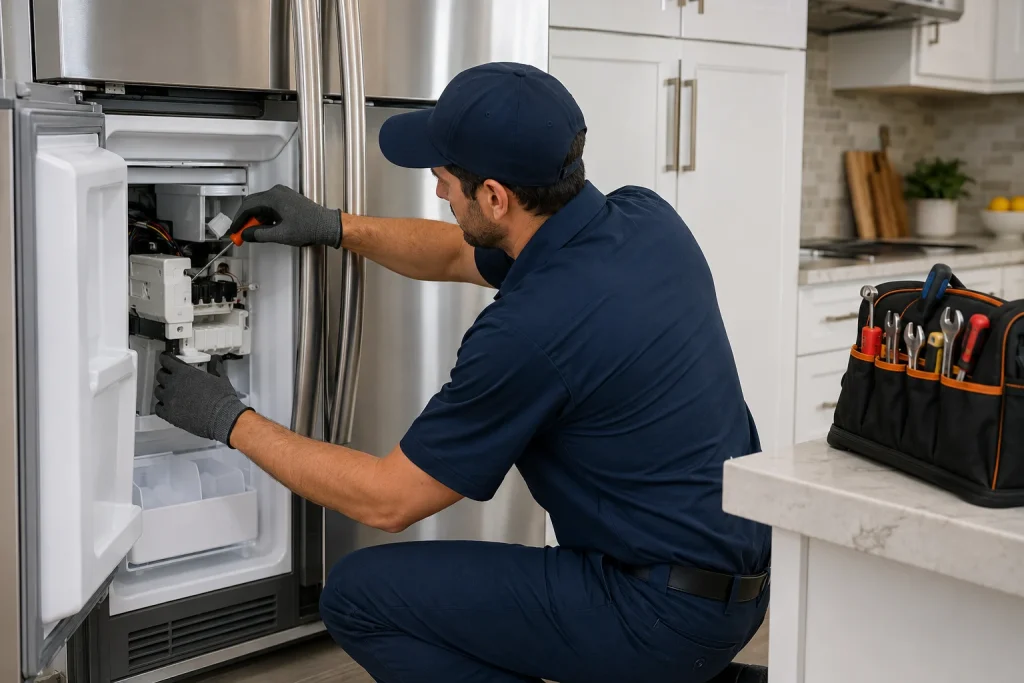
These require professional diagnosis from experienced technicians like those at Knoxville Appliance Pros.
Quick Fix Checks You Can Do at Home
Before calling a technician, try this:
Inside fridge
- Remove items blocking vents
- Check temperature settings
- Look for warm airflow
Inside freezer
- Listen for the fan running
- Check for ice buildup
- Avoid overpacking
Outside unit
- Clean condenser coils
- Ensure space behind the fridge
When You Should Call a Repair Technician in Knoxville
You should contact a professional if:
- Fridge stays warm after basic checks
- Fan is not running
- Ice keeps building up
- Clicking or buzzing sounds continue
- Cooling keeps getting worse
In these cases, it’s best to schedule professional refrigerator repair in Knoxville before the problem gets worse.
Prevention Tips (Save Money Long-Term)
- Clean condenser coils every 6 months
- Don’t block airflow vents
- Keep door seals clean
- Avoid overloading fridge/freezer
- Schedule early repairs
Small maintenance steps prevent major breakdowns.
Conclusion
When your freezer is working but your refrigerator is warm, the problem is usually airflow—not complete system failure.
Most common causes include:
- Blocked vents
- Frozen evaporator coils
- Faulty fan motor
- Damper issues
Serious compressor failure is less common than most homeowners think.
If the issue continues, getting timely refrigerator repair in Knoxville can prevent food loss and costly damage.
Frequently Asked Questions
Why is my freezer cold but the fridge is warm?
This usually happens because cold air is not moving from the freezer into the fridge. The most common reasons are blocked vents, a faulty evaporator fan, or ice buildup on cooling coils. In most cases, the compressor is still working fine, but airflow inside the refrigerator is being restricted or completely stopped.
Is it always a compressor problem when the fridge is warm but freezer is cold?
No, it is rarely a compressor issue. When the freezer works but the fridge is warm, the compressor is usually still fine. The problem is more often caused by airflow issues like a bad fan, frozen coils, or a stuck damper that prevents cold air from reaching the refrigerator section.
Can I fix a refrigerator that is not cooling but the freezer is fine?
Yes, some basic issues can be fixed at home. You can check vents, clean condenser coils, adjust temperature settings, and make sure the door seals are tight. However, if the fan is not working or there is heavy ice buildup, it’s better to call a technician for proper refrigerator repair.
How long can food stay safe in a warm refrigerator?
Food stays safe for about 2 hours if the fridge temperature goes above 40°F. After that, bacteria can start growing quickly. Dairy, meat, and cooked food are the most at risk. If the fridge stays warm for more than 4 hours, many perishable items may need to be thrown away.
Should I keep using my refrigerator if the fridge is warm?
You can keep using the freezer if it is still cold, but avoid relying on the fridge section. Running the refrigerator without fixing the issue can make the problem worse and increase energy use. It’s best to schedule a repair if cooling does not return quickly or keeps getting worse.