You walk into the kitchen and feel it before you see it. A wet sock. A slick tile. A puddle spreading toward the cabinet under your sink.
Your refrigerator is leaking.
The first instinct is to grab a towel. The second instinct is to wonder how long it’s been doing this and what it’s already done to your floor. That’s the right instinct. A refrigerator water leak left unaddressed for even 48 hours can warp hardwood, soak subflooring, and start growing mold behind the toe kick.
In Knoxville, this problem shows up more often than in most parts of the country. Summer humidity that pushes 75%, hard tap water from Knox County’s municipal supply, and seasonal temperature swings all put extra strain on the components most likely to fail and cause water leaks. This guide tells you exactly what’s wrong, where to look, what you can fix yourself, and what needs a technician.
Why Is My Refrigerator Leaking Water?
A refrigerator leaks water when one or more internal systems fail to manage moisture properly. The most common causes are:
- A clogged or frozen defrost drain tube
- A cracked, overflowing, or misaligned drain pan
- A leaking or kinked water supply line (on units with ice makers or dispensers)
- A faulty water inlet valve dripping internally
- A frozen or clogged ice maker fill tube
- A failing door gasket letting warm humid air in
- An unlevel refrigerator causing the drain pan to overflow unevenly
Most of these have a clear location. Find the puddle, then trace it back to the source using the guide below.
The Knoxville Refrigerator Leak Diagnostic Guide
Start by asking one question: where exactly is the water appearing?
The location of the water narrows the cause dramatically. Work through these sections in order.
Water Pooling Inside the Refrigerator or Freezer
If you’re finding water pooled on a shelf, dripping down the interior walls, or collecting at the bottom of the fridge compartment, the defrost drain is almost always the culprit.
The Defrost Drain: What It Does and Why It Fails
Your refrigerator runs an automatic defrost cycle every 8 to 12 hours. During that cycle, the evaporator coils heat up briefly to melt any frost that’s accumulated. That meltwater is supposed to flow down a small drain tube, through a channel in the fridge’s back wall, and into a drain pan at the base of the unit.
When the drain tube gets clogged with food debris or, more commonly in Knoxville’s humid summers, frozen solid from repeated moisture exposure, the meltwater has nowhere to go. It backs up, overflows, and pools inside the fridge compartment. Eventually it drips out the door and onto your floor.
Picture a downspout packed with wet leaves. Water backs up and spills over the edge of the gutter instead of flowing through. Same principle.
Why this happens more in Knoxville: Every time you open the refrigerator door in July or August, warm humid air rushes in. That air carries moisture that settles on the evaporator coils and in the drain tube. In high-humidity conditions, the defrost cycle can’t always keep up, and ice builds up in the drain tube faster than it melts. Knox County homeowners deal with this issue much more frequently in summer than in winter.
Signs it’s the defrost drain:
- Water inside the fridge, often on the lowest shelf or bottom drawer
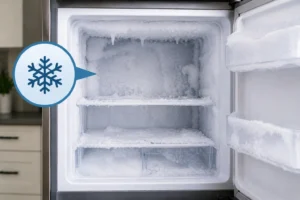
- A slushy or icy buildup at the back of the freezer compartment
- Water dripping from inside the fridge onto the floor, sometimes only after the fridge has been closed for several hours
Water Leaking from Under or Behind the Refrigerator
If the puddle is at the back of the unit or appears to come from underneath, you’re likely dealing with one of three components.
The Water Supply Line
Refrigerators with an ice maker or water dispenser have a supply line running from your home’s cold water feed to the back of the unit. It’s usually a thin braided steel or plastic tube connected with compression fittings.
Supply line leaks happen for three reasons: the connection has worked loose over time, the tube has been kinked or crimped (often when someone pushed the fridge back against the wall too hard), or the plastic tubing has cracked from age, hard water stress, or freezing.
Even a slow drip from a supply line connection can dump a surprising amount of water onto the floor over several days. Braided steel lines are more durable than plastic, but they still fail at the fittings over time.
The Water Inlet Valve
The water inlet valve is an electrically operated valve, usually at the lower back of the refrigerator, that controls water flow into the ice maker and dispenser. When it starts to fail, it can drip internally, causing water to pool at the base of the unit.
This is one of the most commonly missed causes in generic articles. The valve doesn’t fail all at once. It typically weeps slowly at first, often going unnoticed until there’s a stain on the floor or the fridge has been pulled out for another reason.
Why Knox County’s hard water accelerates this: Knoxville’s tap water carries mineral deposits, primarily calcium and magnesium. Over years, those minerals build up inside the water inlet valve, causing the internal seals to degrade and the valve mechanism to stick partially open. It’s the same reason you see white scale around your faucet aerators and showerheads. The inlet valve gets the same buildup internally, where you can’t see it until it starts leaking.
The Drain Pan
The drain pan sits at the bottom of the refrigerator and collects water from the defrost cycle. Under normal conditions, the pan is designed to be mostly empty because the warm air from the condenser fan evaporates the water before it can accumulate.
But if the condenser coils are dirty (a common issue in Knoxville homes with pets and Appalachian dust), the fan isn’t circulating warm enough air across the pan, and water builds up faster than it evaporates. Eventually the pan overflows.
Drain pans can also crack from age or if someone bumps the unit hard during cleaning. A cracked pan drips steadily, usually toward the front or side of the unit.
Water Appearing Near the Ice Maker
If you have a built-in ice maker and you’re finding water inside the freezer or near the ice maker housing, the fill tube is the most likely cause.
The ice maker fill tube is a small plastic or rubber tube that delivers water from the inlet valve into the ice maker tray. In humid conditions, moisture from the air can condense inside or around this tube and freeze over time, partially or completely blocking it. When the ice maker tries to fill, water backs up and spills.
Samsung refrigerators in particular are well-known for recurring ice maker issues, including fill tube freeze-over and ice maker housing cracks that cause internal leaks. If you have a Samsung with ice maker problems, check whether your model is included in any manufacturer advisory. Our ice maker repair team in Knoxville handles these frequently and can tell you whether repair or replacement makes more sense for your specific model.
Water at the Front Bottom of the Refrigerator
Water appearing specifically at the front bottom, near the toe kick grille, is usually one of two things: an overflowing drain pan or a door gasket problem.
Door Gasket Failure
The door gasket is the rubber seal that runs around the perimeter of the refrigerator and freezer doors. When it wears out, cracks, or deforms, warm humid air seeps into the fridge constantly. That air condenses on cold surfaces and produces excess moisture that the defrost drain and drain pan have to manage.
When there’s more moisture coming in than the system was designed to handle, the result is water pooling at the bottom of the fridge, dripping out the front, or accumulating inside in ways that look like a leak from another source.
Do the dollar bill test: close the door on a dollar bill. If it slides out without any friction, the gasket isn’t sealing properly. Replace it before the moisture issue worsens.
Leveling Problems
This one surprises most homeowners. If a refrigerator isn’t level, or is tilted forward rather than slightly backward, the drain pan sits at an angle that causes it to overflow toward the front of the unit before it’s actually full.
The fix is simple. Adjust the front leveling feet until the refrigerator tilts very slightly backward. This both fixes the drain pan overflow and helps the doors swing shut properly on their own.
The Knoxville Factor: Why Leaks Are More Common Here
Generic articles about refrigerator leaks were written for a refrigerator in a climate-controlled room with average humidity and soft municipal water. Most Knoxville kitchens don’t fit that description in summer.
High summer humidity overloads the defrost system.
When outdoor humidity is at 70% or above, which NOAA climate records show is typical for Knoxville from June through September, every time a refrigerator door opens, a significant moisture load enters the unit. The evaporator coils and drain system weren’t designed to handle that level of continuous moisture input. The defrost drain clogs faster. The drain pan fills faster. Gaskets degrade faster from constant thermal stress.
Hard water deposits damage internal valves and lines.
Knox County’s water supply contains mineral hardness that accumulates over time inside water inlet valves, ice maker fill tubes, and water line connections. These deposits narrow the internal passages, cause seals to fail prematurely, and create the partial blockages that lead to dripping and leaking. It’s an invisible problem that builds slowly until it becomes a visible one on your kitchen floor.
Pets and Appalachian dust clog condenser coils.
When condenser coils are coated in dust and pet hair, they can’t properly warm the air that flows across the drain pan. Water in the pan evaporates more slowly. During a hot Knoxville summer when the fridge is already working overtime, this can tip the balance from slow evaporation to outright overflow.
Cleaning the condenser coils every 3 to 6 months is especially important here. It prevents not just leaks but also the compressor stress we cover in our refrigerator maintenance guide for Knoxville homeowners.
Water damage escalates fast in a humid environment.
In a dry climate, a slow refrigerator leak might soak a floor over weeks before causing real damage. In Knoxville’s summer humidity, a wet subfloor under a refrigerator is a mold risk within 24 to 48 hours. If you’re finding water, act the same day. Don’t wait until the weekend.
Safe DIY Quick-Fixes to Try Before Calling a Pro
These three steps are safe, cost nothing or nearly nothing, and resolve the majority of refrigerator water leak calls.
Fix 1: Clear the Defrost Drain
Safety first: Unplug the refrigerator before reaching inside the freezer compartment or near any electrical components.
- Locate the defrost drain opening at the back interior of the freezer (usually a small hole at the base of the rear panel)
- Use a turkey baster filled with warm water to flush the drain. The water should flow freely through
- If it backs up, use a thin flexible brush or pipe cleaner to break up any ice or debris blocking the tube
- Flush again with warm water until it drains freely
- Dry the interior, plug the fridge back in, and monitor over the next 24 hours
If the drain clogs again within a week or two, the drain tube itself may need to be repositioned or replaced, and the evaporator coils may need to be inspected for excess ice buildup. At that point, call a technician.
Fix 2: Inspect and Reseat the Water Supply Line
Safety first: Turn off the water supply valve to the refrigerator before touching the supply line. It’s usually a small valve behind the fridge or under the sink nearby.
- Pull the refrigerator out from the wall carefully
- Check the supply line for kinks, cracks, or moisture around the fittings
- Hand-tighten any loose connection at the back of the fridge. Don’t overtighten.
- If the line is plastic and showing cracks or brittleness, replace it with a braided stainless steel line. They cost $15 to $25 at any hardware store and are significantly more reliable
- Turn the water back on, check for drips, and push the fridge back with at least 2 inches of clearance behind it so the line doesn’t kink
Fix 3: Level the Refrigerator and Re-Seat the Drain Pan
- Use a bubble level (or a free level app on your phone) placed on top of the fridge
- Adjust the front feet by turning them clockwise to raise, counterclockwise to lower
- Set the fridge so it’s level side to side and very slightly tilted back (front is just barely higher than the rear)
- Pull out the lower front grille and check the drain pan. Re-seat it firmly if it’s shifted
- Look for any cracks in the pan. A cracked drain pan costs $15 to $40 to replace and is a straightforward swap
These three fixes handle the most common causes of refrigerator leaking. If water returns after doing all three, the problem is internal and needs a technician.
When to Call a Knoxville Professional
Some refrigerator leak causes are safe to check yourself. Others involve components where the wrong move creates a bigger problem or a safety risk.
Call a professional if:
The water inlet valve is leaking. Replacing a water inlet valve requires shutting off the water supply, disconnecting wiring harnesses, and working near live electrical connections. The valve itself costs $30 to $80, but the repair requires comfort with both plumbing connections and appliance wiring. One wrong move on the electrical side means a short circuit. One loose connection on the water side means a leak behind the fridge that you won’t notice until the floor is damaged.
The defrost drain keeps clogging after you’ve cleared it. Repeat clogging usually means the evaporator coils have a significant ice buildup that the defrost heater can’t manage. This points to a failed defrost heater, defrost thermostat, or defrost timer. Diagnosing which one requires a multimeter and knowledge of how to safely test refrigerator electrical components. Per EPA Section 608 regulations, any work that involves opening the sealed refrigerant system must be done by a certified technician.
There’s water inside the walls of the refrigerator or cabinet. This can indicate a refrigerant leak or a cracked evaporator coil causing frost to form and melt in unexpected places. Refrigerant handling is federally regulated and requires specialized equipment and certification.
You see signs of mold or water damage under the fridge. If the leak has been ongoing long enough to cause discoloration, softness, or smell in the floor, stop using the refrigerator and call for service immediately. Continued water exposure accelerates structural floor damage. The EPA’s mold prevention guidelines recommend addressing water intrusion within 24 to 48 hours to prevent mold growth.
The refrigerator isn’t cooling properly alongside the leak. A water leak combined with cooling failure points to a more complex issue, possibly involving the sealed refrigerant system or a failed component causing both symptoms at once. Get a professional diagnosis before the food loss adds to the repair cost.
Our refrigerator and freezer repair team in Knoxville carries the most common replacement parts on the truck and provides a written estimate before any work begins. We serve Knoxville, Farragut, Oak Ridge, Maryville, and Powell. If you’re not sure whether your situation needs professional attention, reach out to us here and describe what you’re seeing. We’ll give you a straight answer.
What a Refrigerator Water Leak Repair Costs in Knoxville
Most homeowners want this information before they call anyone. Here are honest ranges:
- Defrost drain clearing (DIY): Free, using warm water and a turkey baster
- Drain pan replacement: $15 to $40 for the part; DIY-friendly
- Water supply line replacement: $15 to $25 for a braided steel line; DIY-friendly
- Water inlet valve replacement (professional): $120 to $250 total (parts and labor)
- Defrost heater or thermostat replacement (professional): $150 to $300 total
- Ice maker fill tube repair or ice maker replacement (professional): $150 to $350 total
- Door gasket replacement (professional or DIY depending on model): $60 to $150 total
For a complete look at when repair makes financial sense versus replacing the unit, see our refrigerator repair vs. replace guide for Knoxville homeowners.
Serving Knoxville and Surrounding Communities
Knoxville Appliance Pros handles refrigerator water leak repairs throughout the greater Knoxville area.
Service areas include: Knoxville, Farragut, Oak Ridge, Maryville, Powell, Halls, Corryton, Hardin Valley, Karns, and surrounding East Tennessee communities.
Contact us to schedule a same-day or next-day diagnostic visit.
We also service washers, dryers, dishwashers, ovens, garbage disposals, and ice makers. If another appliance needs attention, see our full list of appliance repair services in Knoxville. You can also learn more about our technicians and service approach here.
Frequently Asked Questions
Why is my refrigerator leaking water inside but not on the floor?
Water pooling inside the refrigerator compartment almost always means a clogged or frozen defrost drain. The meltwater from the automatic defrost cycle has nowhere to go, so it backs up and pools on shelves or at the bottom of the fridge. Try flushing the drain with warm water using a turkey baster. If it drains freely, the clog is cleared. If it backs up, the tube may be frozen solid and need more thorough clearing or the defrost system may need professional inspection.
Is a refrigerator water leak dangerous?
The leak itself is not immediately dangerous, but leaving it unaddressed creates real risks. Water near the base of a refrigerator can reach the compressor or electrical components at the bottom of the unit. In Knoxville’s humid summers, a wet floor under a refrigerator can develop mold within 24 to 48 hours. Softwood subflooring can warp within a few days. If the water appears near the back of the unit where electrical connections are located, unplug the refrigerator and call for service before using it again.
How much does it cost to fix a leaking refrigerator in Knoxville?
It depends on the cause. The defrost drain can often be cleared at home for free. A cracked drain pan or faulty supply line costs $15 to $40 in parts for a DIY fix. Professional repairs for a water inlet valve, defrost heater, or ice maker components typically run $120 to $350 including parts and labor in the Knoxville area. Getting a proper diagnosis first saves you from replacing the wrong part.
Why does my fridge only leak in summer?
This is very common in East Tennessee. Summer humidity in Knoxville regularly pushes above 70%. That moisture enters the refrigerator every time the door opens, loading the defrost drain, fill tube, and drain pan with more moisture than they typically handle. Gaskets that are slightly worn may hold fine in winter but leak warm humid air all summer, causing excess condensation inside the unit. If your refrigerator only leaks from June through September, inspect the door gaskets first and check the defrost drain for summer ice buildup.
Can a leaking refrigerator fix itself?
No. A refrigerator leak does not resolve on its own. If the leak appears to stop temporarily, the cause is still present and will return, often worse. A frozen defrost drain might thaw briefly during a defrost cycle and appear to resolve, then re-freeze and block again within days. Address any water leak the same day you find it.