A leaking garbage disposal should not be judged by where the water finally reaches the cabinet floor. Water can run down from the sink flange or a side connection and make a disposal appear to be leaking from the bottom. The useful diagnostic question is: where does the water first appear?
Leaks from the sink connection, drain outlet or dishwasher hose may be repairable. Water emerging through the disposal housing itself is a different problem and can indicate an internal seal or housing failure.
Quick answer: why is my garbage disposal leaking?
| Where water first appears | Likely source |
|---|---|
| Top where disposal meets sink | Sink flange, mounting assembly or seal |
| Side drain outlet | Gasket, discharge connection or drain pipe |
| Dishwasher hose inlet | Hose, clamp or inlet connection |
| Bottom or through housing | Internal seal or damaged disposal housing |
| Leak only when dishwasher drains | Dishwasher hose or inlet connection |
Why leak location matters
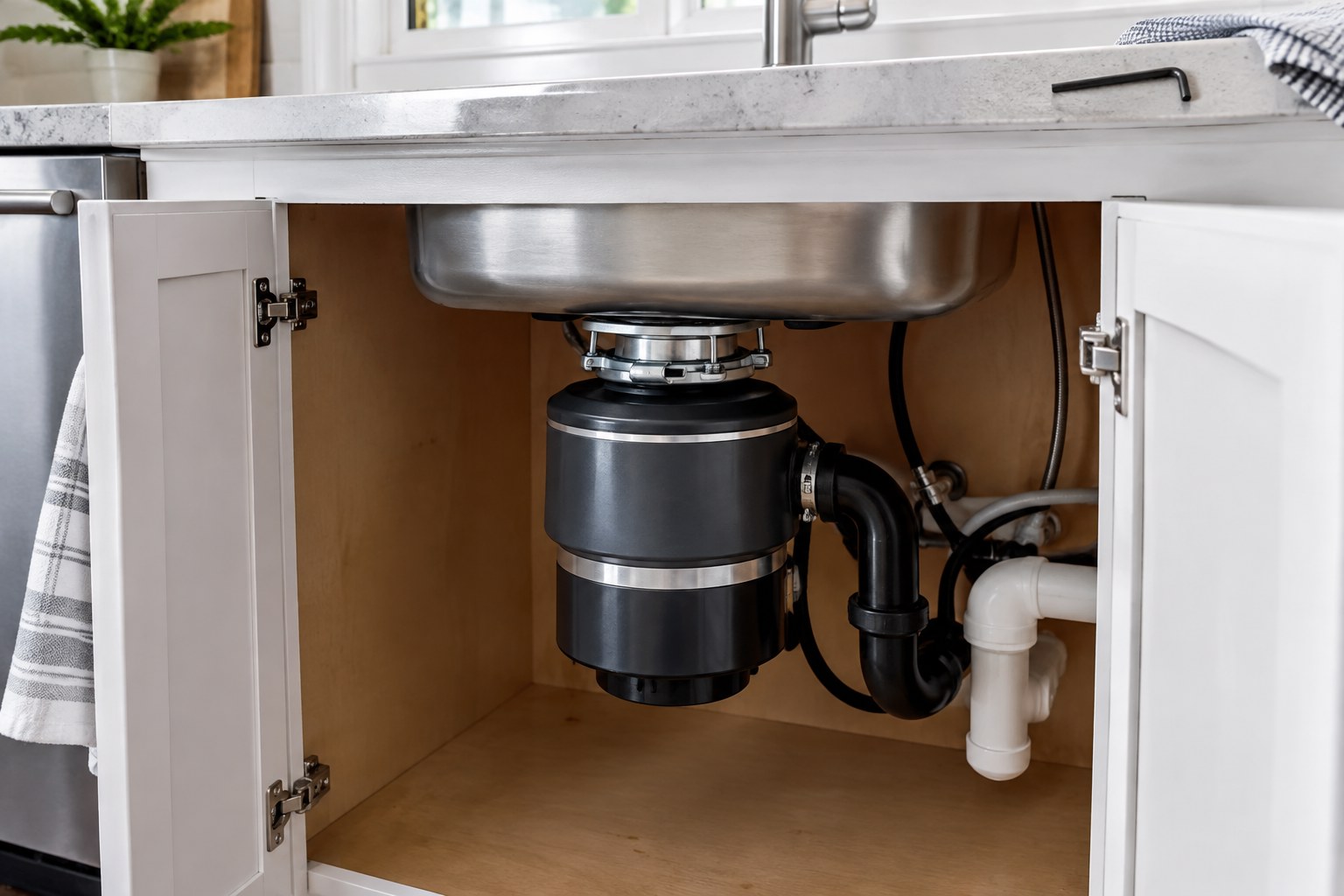
The disposal has several water connections. The upper mounting area attaches to the sink, one side connects to the drain line, and another connection may accept the dishwasher drain hose. Water can travel along the outside of the unit before dripping, so looking only at the lowest point can send the diagnosis in the wrong direction.
Dry the accessible area first. Then use a small amount of water to determine where moisture begins, while keeping hands and electrical connections away from the disposal opening and power source.
Common causes of a leaking garbage disposal
1. Sink flange or mounting seal leak
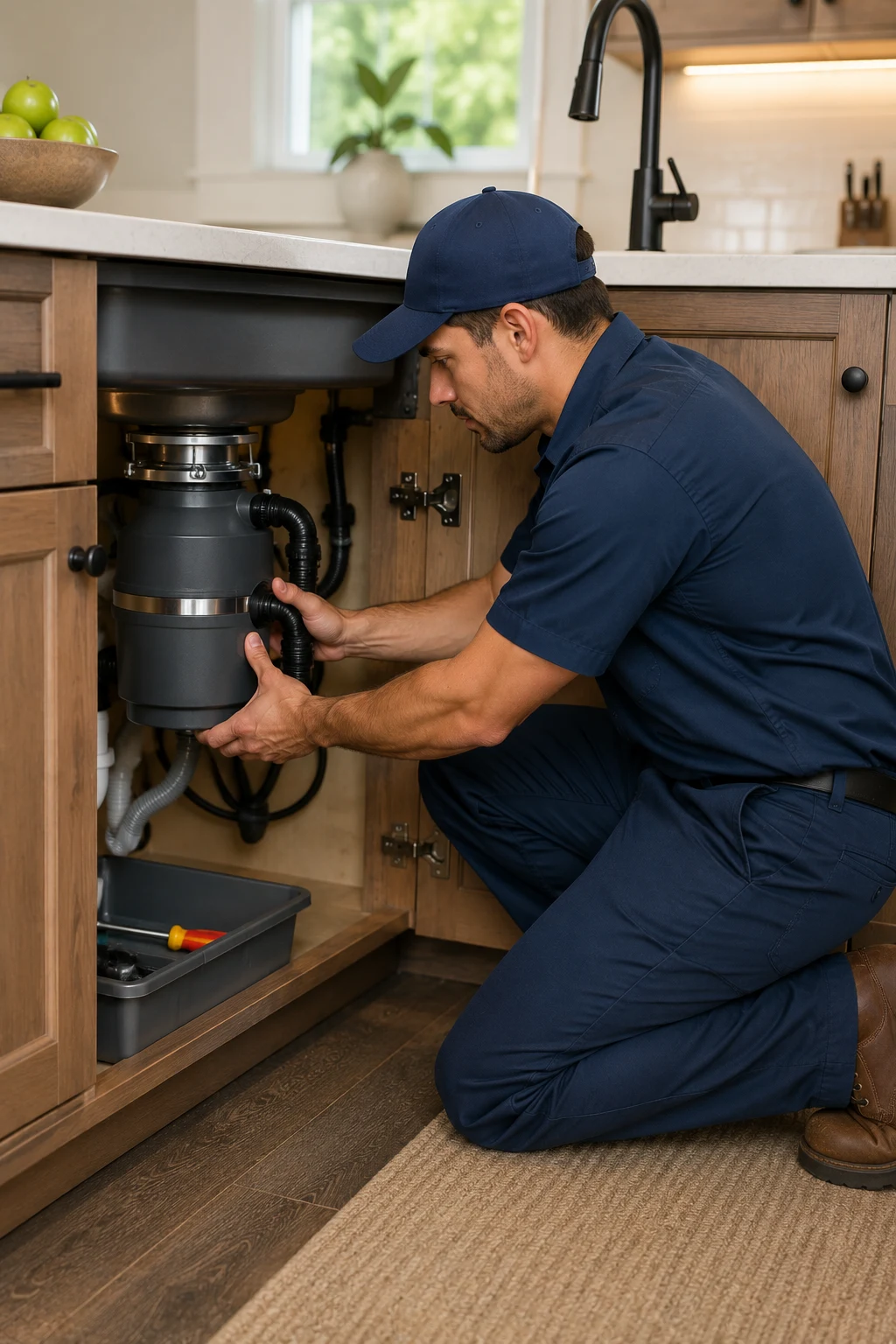
The top of the disposal is sealed to the sink flange. If the mounting assembly loosens or the seal deteriorates, water can escape around the upper connection.
A top leak is different from a leak through the disposal body. If water starts at the sink-to-disposal joint, tightening or resealing the connection may be part of the repair, depending on the mounting design.
2. Loose or damaged discharge connection
The disposal’s discharge outlet connects to the drain plumbing. A loose fastener, damaged gasket or misaligned connection can allow water to escape when the disposal or sink drains.
Do not overtighten plastic plumbing connections. A cracked fitting or damaged gasket will not necessarily improve with more force and may become worse.
3. Dishwasher hose connection leak
If the dishwasher drains through the disposal, the hose connection can leak only when the dishwasher pumps wastewater into the disposal. This pattern is useful because a dry connection during normal sink use may become wet during a dishwasher cycle.
Check the hose, clamp and disposal inlet for moisture or signs of deterioration. If the hose is cracked or the connection is damaged, replacing the affected component may be more appropriate than replacing the entire disposal.
4. Internal disposal seal failure
If water genuinely emerges from the disposal housing rather than an external connection, the situation is more serious. Internal seals separate water from the motor and other internal components. A failure inside the housing may not be accessible as a simple external tightening repair.
This is particularly important if water appears from the bottom plate, around the motor area or through the body of the unit. Do not assume an external fitting is responsible just because the water is visible there.
5. Cracked or damaged housing
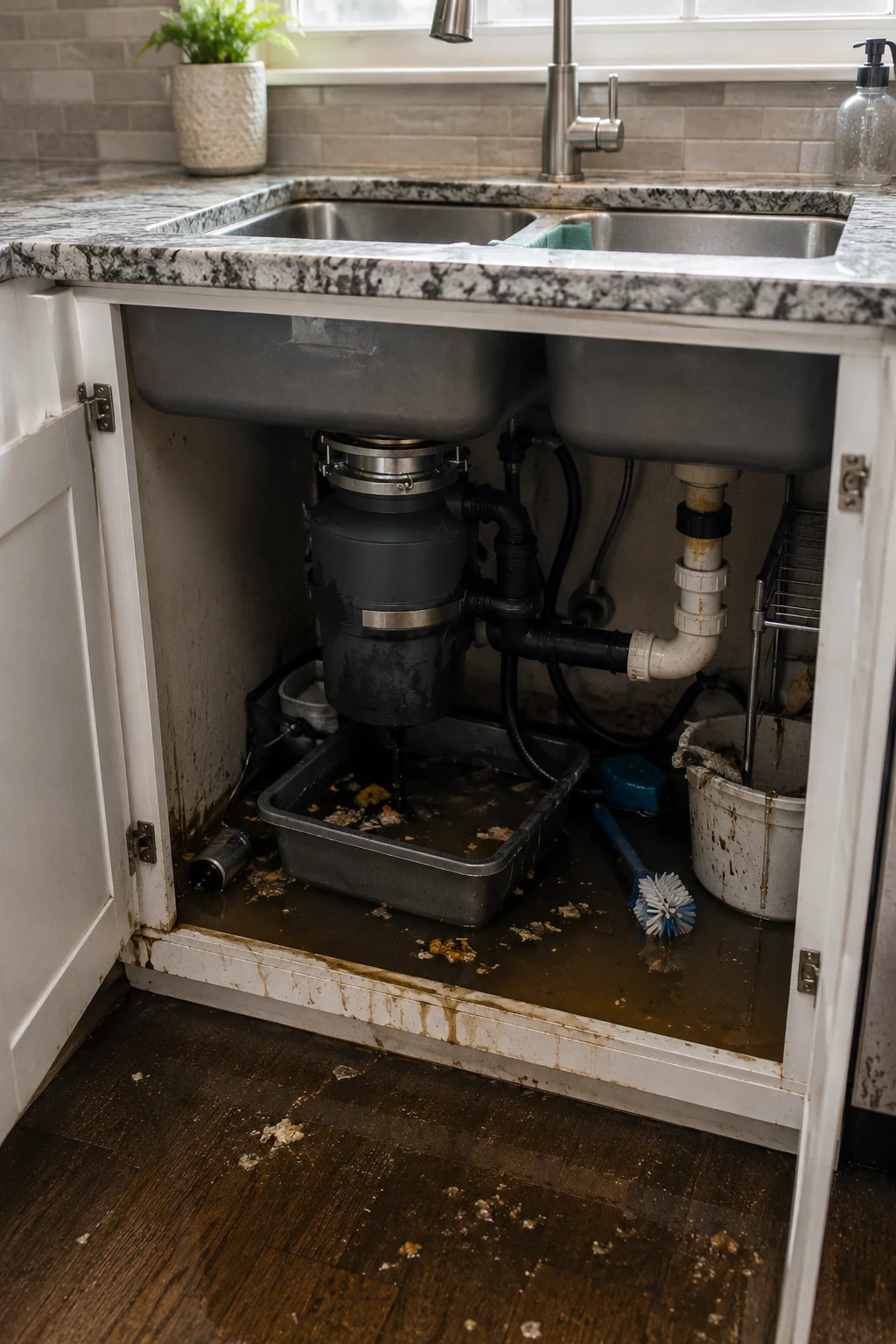
A disposal housing can become damaged through age, corrosion, impact or another failure. A crack in the body is generally not a reliable candidate for a household sealant repair. The unit’s electrical and mechanical construction makes proper replacement the safer option when the housing itself has failed.
How to find the source without creating another problem
- Stop the disposal. Do not run it while investigating a leak.
- Keep hands out of the grinding chamber. Never reach inside to locate a leak or object.
- Isolate power if you need to inspect nearby components. Use the appropriate breaker or disconnect method for the installation.
- Dry the outside of the unit. Wipe the housing and accessible connections so fresh moisture is easy to see.
- Use a small amount of water to reproduce the leak. Watch the upper flange, side connections and dishwasher inlet.
- Note when the leak appears. Sink draining, disposal operation and dishwasher draining can reveal different leak paths.
- Stop if water reaches electrical connections. Do not continue operating the appliance until it is assessed.
Garbage disposal leaking from the bottom: does it need replacement?
A true bottom or housing leak is more concerning than a loose external connection. However, before replacing the disposal, confirm that water is actually originating from the housing. Water from the sink flange or discharge connection can run downward and imitate a bottom leak.
If the housing itself is leaking, replacement is often more practical than attempting to repair an internal seal that the manufacturer does not intend to be serviced separately. The exact repairability depends on the disposal model and the failed component.
Leak vs drain blockage
| Symptom | More likely problem |
|---|---|
| Water drips from a connection | Seal, gasket, hose or mounting issue |
| Sink drains slowly but no external leak | Drain blockage |
| Water comes through disposal housing | Internal seal or housing failure |
| Leak occurs only while dishwasher drains | Dishwasher hose or inlet connection |
| Disposal hums and leaks | Could be separate jam and leak faults; diagnose each symptom independently |
What not to do
- Do not put your hand inside the disposal.
- Do not keep operating a leaking unit to “see if it gets better.”
- Do not pour chemical drain cleaner into the disposal.
- Do not assume a bottom drip proves the internal seal has failed without tracing the source.
- Do not overtighten plumbing fittings or mounting hardware.
- Do not continue operation when water is reaching electrical connections.
Repair or replace the disposal?
An external gasket, hose, drain connection or mounting problem may be repairable without replacing the disposal. A cracked housing or confirmed internal seal failure can make replacement more practical, especially if the unit is older or has other mechanical problems.
Consider the appliance’s age, overall condition, repair complexity, parts availability and the possibility of related plumbing work. The lowest-cost part is not always the best repair if the disposal has several developing problems.
When professional garbage disposal repair makes sense
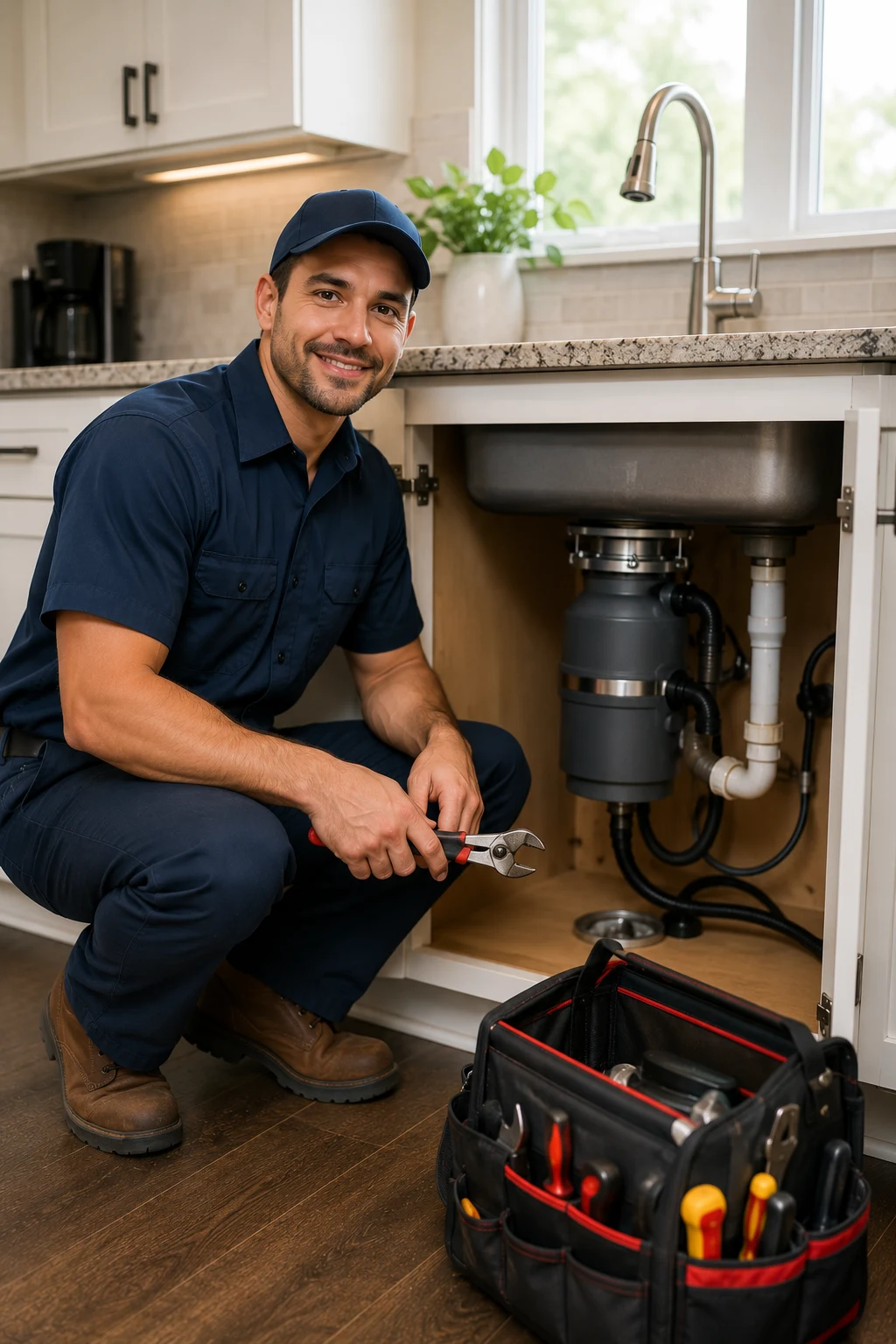
Professional diagnosis makes sense when the leak source is unclear, water is reaching electrical components, the disposal housing appears to be leaking, the mounting system needs disassembly, or the repair involves an internal component.
For the related humming symptom, read Why Is My Garbage Disposal Humming but Not Spinning?. For service information, see our garbage disposal repair service in Knoxville.
Frequently asked questions
Why is my garbage disposal leaking from the bottom?
If water truly originates from the bottom or housing, an internal seal or housing failure is possible. First confirm that water is not traveling down from a higher connection.
Can a loose sink flange cause a disposal leak?
Yes. A compromised seal at the sink flange can allow water to escape around the top of the disposal.
Why does my disposal leak only when the dishwasher runs?
The dishwasher hose or disposal inlet connection may be leaking under the higher flow produced during dishwasher drainage.
Can I use the disposal while it is leaking?
It is better to stop using it until the leak source is identified, particularly if water can reach electrical connections.
Should I replace a leaking garbage disposal?
Not automatically. External connection leaks can often be addressed without replacing the unit. A confirmed housing or internal seal failure is more likely to justify replacement.
Can water from the sink make a disposal look like it is leaking from the bottom?
Yes. Water can travel along the outside of the unit. Always identify the first point where fresh water appears.
Bottom line
Find the first point where water appears before buying a replacement disposal. Top, side and dishwasher connections can have repairable leaks, while water emerging through the disposal housing can indicate an internal failure. Keeping those two situations separate leads to a better repair decision and avoids replacing a disposal unnecessarily.