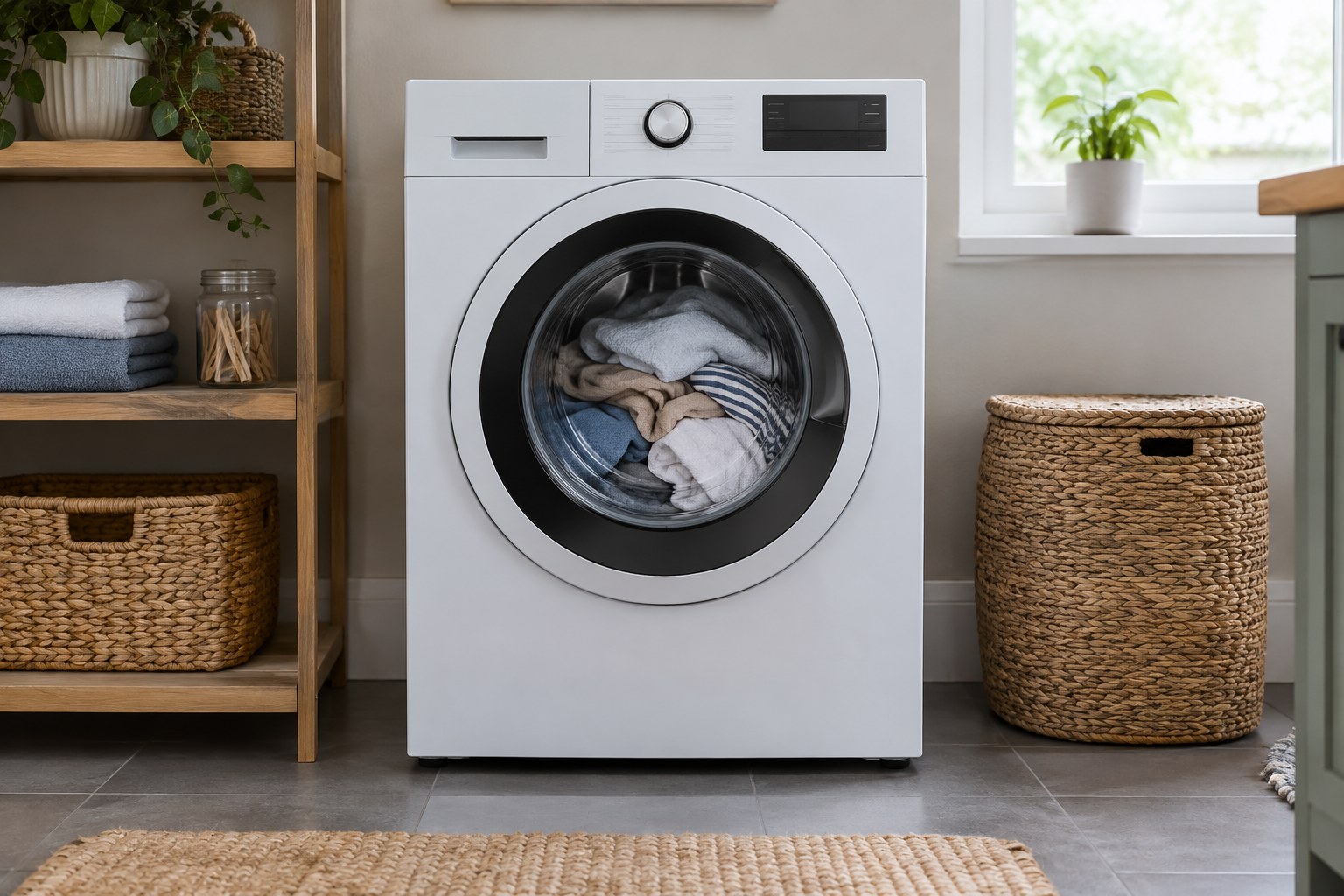
A washing machine that will not spin is often preventing the spin cycle for a reason. The washer may still fill and wash normally but refuse high-speed spinning because it cannot drain, cannot confirm that the lid or door is locked, detects an unbalanced load, or has a problem in the drive system.
That distinction matters. A washer full of water is primarily a drainage problem, while a washer that drains completely but never spins points more strongly toward the lock, motor, belt, clutch, actuator or control system.
Quick answer: why is my washing machine not spinning?
Start with four questions: Is there water left in the tub? Is the load badly unbalanced? Does the washer recognize that the lid or door is closed? Does the drum attempt to move at all?
| What you notice | Most useful direction |
|---|---|
| Water remains in the tub | Drain hose, pump filter, drain pump or drain control |
| Washer spins empty but not with clothes | Load balance, suspension or excessive load |
| Washer will not recognize closed lid/door | Lid switch or door-lock system |
| Drum hums or tries to move | Drive system, motor, obstruction or control |
| Drum never attempts to move and shows an error | Model-specific sensor, lock or control diagnosis |
Why a washer may refuse to spin
High-speed spinning is one of the more demanding parts of a wash cycle. The washer must control water level, drain the tub, verify that the door or lid is secure, manage vibration and accelerate the drum or basket safely. Modern machines use sensors and electronic controls to stop or reduce spin when one of those conditions is not satisfied.
That means “not spinning” is a symptom, not a diagnosis. The same symptom can come from a blocked drain pump on one washer and a failed lid-lock assembly on another.
Common causes
1. An unbalanced load
A single heavy blanket, bath mat or large towel can move to one side of the basket. The control may repeatedly attempt to redistribute the load or cancel high-speed spin to prevent excessive vibration.
Open the washer and redistribute the load evenly. If a very heavy item is being washed by itself, follow the manufacturer’s recommendations for load size. Do not keep restarting the machine with an obviously unbalanced load.
2. The washer did not drain
Many washers will not enter high-speed spin while water remains in the tub. A blocked pump filter, kinked drain hose, clogged pump, failed drain pump or drain-control problem can therefore look like a spin failure.
Front-load models often have an accessible pump filter, although its location and cleaning procedure vary. If your model has one, follow the owner’s manual and prepare for water to escape when the filter is opened.
3. Lid switch or door lock problem
Top-load washers commonly use a lid switch or lock. Front-load machines use a door-lock assembly. If the control cannot verify that the opening is secured, it may prevent the spin cycle even though the washer can perform earlier portions of the program.
A washer that stops immediately after the lid or door closes, or displays a lock-related error, gives a stronger clue toward this system. Do not bypass the safety switch to force a spin cycle.
4. Drain pump or pump filter restriction
Coins, lint, hairpins and small objects can restrict the drain system. If the washer drains slowly or makes a humming sound during drain, investigate the accessible drain components before blaming the motor or control board.
5. Worn belt, clutch, coupling or actuator
Washer drive systems vary significantly by model. Depending on the design, the machine may use a belt, clutch, motor coupling, actuator, pulley system or direct-drive motor. Wear can produce symptoms such as a slow spin, no spin, intermittent spin or unusual mechanical noise.
The correct diagnosis depends on the washer design. A belt problem on one model does not mean a similar symptom on another model has the same cause.
6. Motor or motor-control problem
The motor must accelerate the basket against the load. A motor fault, wiring problem or motor-control component can prevent the washer from reaching spin speed. Some electronic systems also monitor motor position and speed, so a sensor problem can stop the cycle even when the motor itself is mechanically sound.
7. Suspension or balance-system problem
If the washer repeatedly becomes violently unbalanced even with reasonable loads, the suspension system or leveling may need attention. A machine that rocks on the floor or has worn suspension components may trigger repeated balance corrections or cancel the spin cycle.
Safe troubleshooting sequence
- Stop the cycle. Do not reach into a moving washer.
- Check for standing water. If water remains, treat drainage as the first diagnostic path.
- Redistribute the load. Remove an obviously oversized or single heavy item and retry only if the appliance is otherwise safe.
- Check the visible drain hose. Look for a kink or crushing.
- Check the lid or door behavior. Note whether the washer recognizes the closed position and whether an error code appears.
- Inspect an accessible pump filter if your model provides one. Disconnect power and follow the model’s procedure.
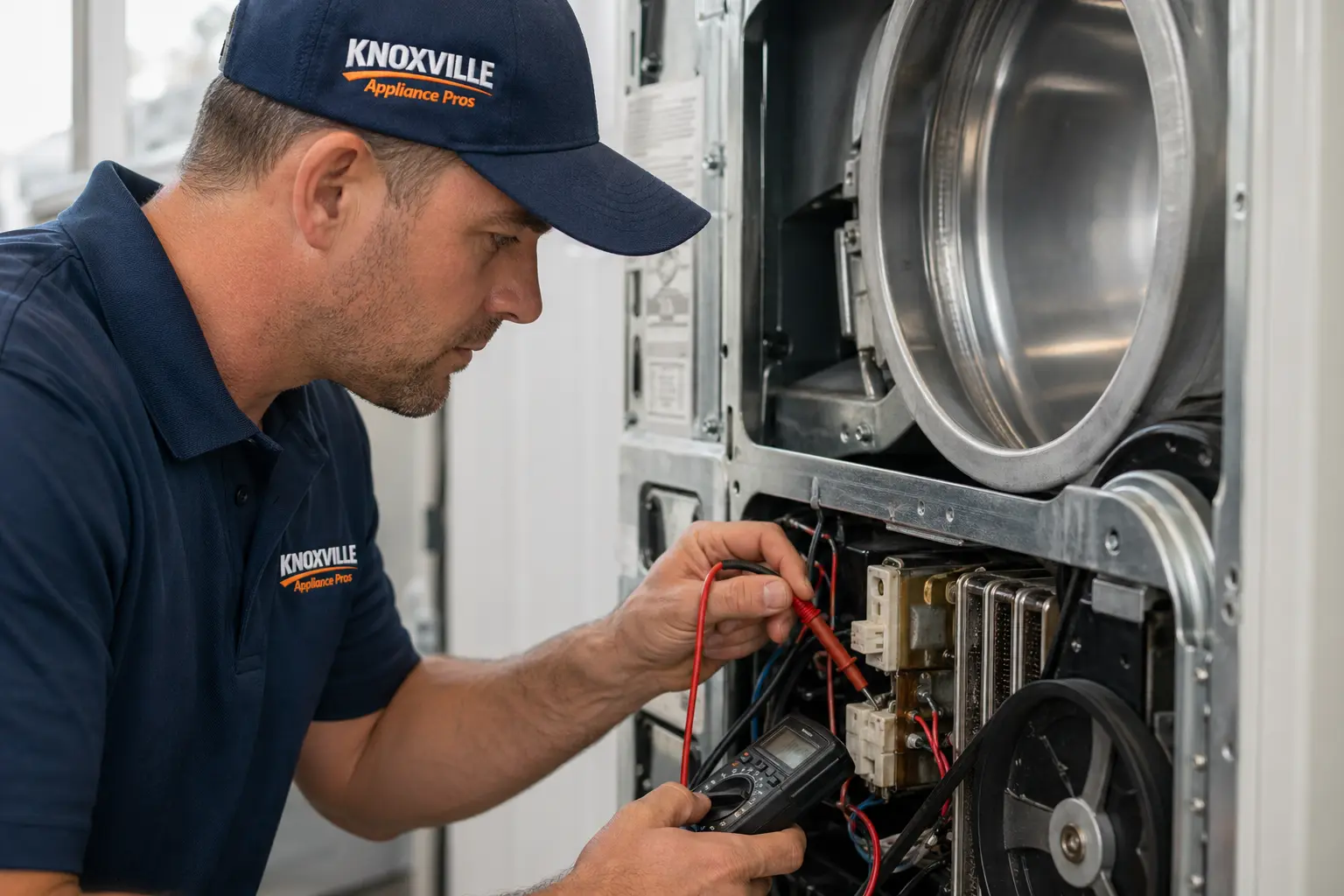
- Stop before panel removal. Motor, belt, actuator, control and lock testing may require electrical or mechanical disassembly.
Washer drains but will not spin vs washer will not drain
| Pattern | More likely area |
|---|---|
| Full of water and no spin | Drain restriction or pump problem |
| Drains completely but no spin | Lock, drive system, motor, sensor or control |
| Spins empty but not with a load | Balance, suspension or load-related issue |
| Attempts to spin then stops | Balance detection, drive problem, motor or control |
| Spin accompanied by grinding | Mechanical drive or bearing-related problem |
What not to do
- Do not bypass the lid switch or door lock.
- Do not reach into the drum while it is moving.
- Do not keep running an overloaded or violently unbalanced washer.
- Do not replace the control board before checking simpler mechanical and drainage causes.
- Do not assume a belt is broken simply because the drum does not spin. Many washers use direct-drive systems.
Repair or replacement?
A washer that will not spin is often repairable. A drain pump, lid lock, belt, actuator or other individual component can fail while the rest of the appliance remains serviceable. Replacement becomes more reasonable when the washer has multiple major failures, significant tub or cabinet damage, repeated repairs, or a repair that does not make sense relative to the machine’s overall condition.
Cost should be evaluated from the complete repair picture: diagnosis, labor, parts availability, appliance age, previous failures and the condition of the motor, tub, bearings and controls.
When to call for washer repair
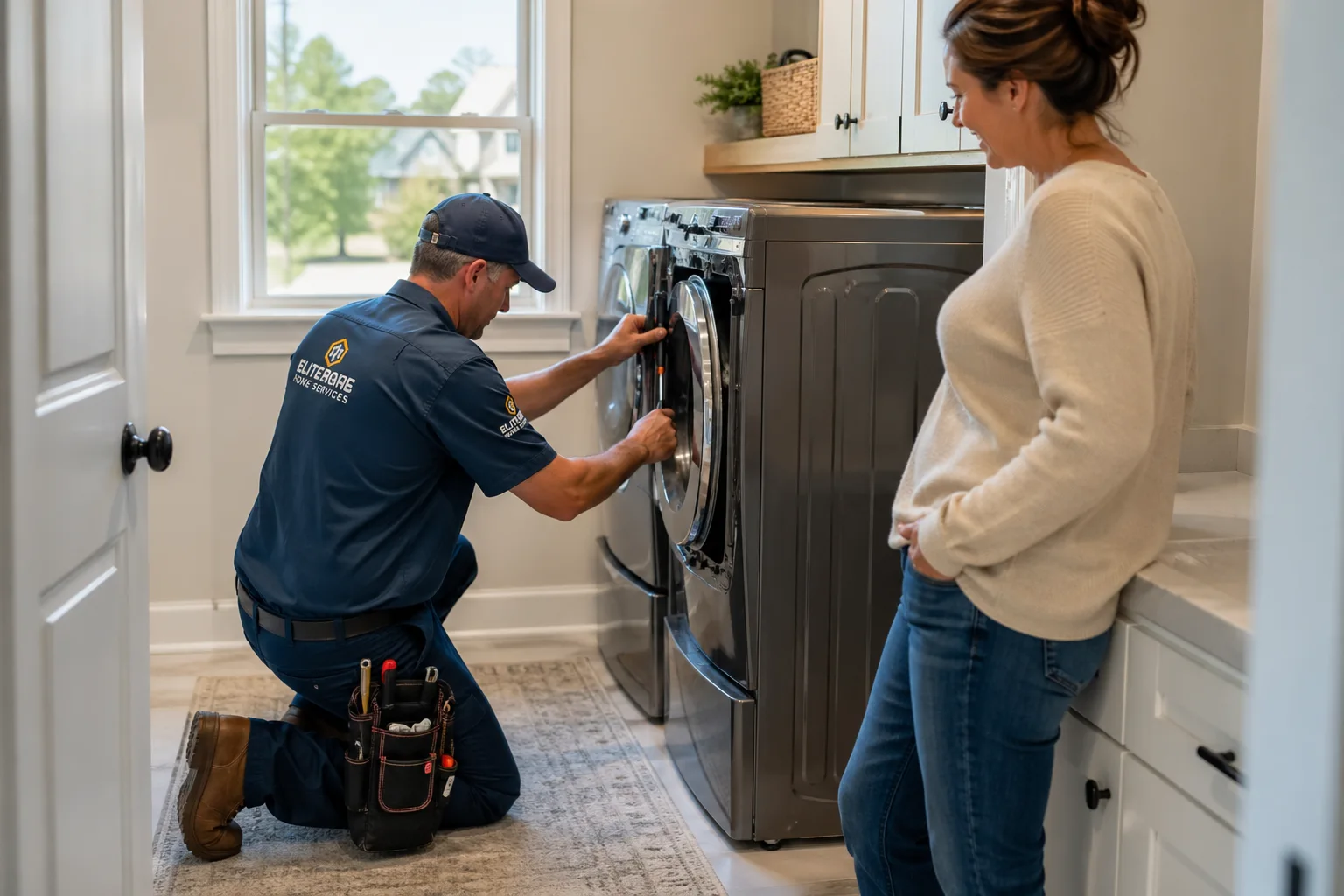
Professional diagnosis is appropriate when the washer drains normally, the load is balanced and the machine still refuses to spin. It is also appropriate when there is a burning smell, electrical fault, repeated error code, loud mechanical noise, leaking water near electrical components or a problem that requires internal access.
Knoxville Appliance Pros provides washer and dryer repair in Knoxville for spin, drainage, drive, heating and related problems.
If water remains in the tub, the spin symptom may actually be a drain problem. See why a washing machine may not drain after a cycle before assuming the drive system has failed.
Frequently asked questions
Why does my washing machine wash but not spin?
The washer may be detecting an unsafe condition, may not have drained, or may have a problem with the lock, drive system, motor, sensor or control.
Can an unbalanced load stop a washer from spinning?
Yes. Many machines reduce or cancel high-speed spin when the basket cannot be balanced safely.
Why is my washer full of water and not spinning?
Check the drain path first. A washer may prevent spin until it has removed the water from the tub.
Why does my washer spin slowly?
An imbalance, restricted drainage, worn drive component, motor issue or control problem can produce slow or incomplete spinning.
Should I replace the motor if the washer will not spin?
No. The motor is only one possible cause. Drainage, the lid or door lock, drive components, sensors and controls should be considered first.
Is a washer worth repairing if it will not spin?
Often, yes. The decision depends on the appliance’s age, condition, failed component, repair complexity and previous repair history.
Bottom line
Start by separating a drain problem from a true spin-system problem. Check for standing water, redistribute the load, verify the lid or door lock and inspect any manufacturer-approved accessible drain filter. If those checks are normal, the drive system, motor, sensors or controls need a more specific diagnosis.