A dryer that tumbles but produces no heat usually has a problem in one of four areas: airflow, electrical supply, the heating circuit, or the temperature-control and safety system. The symptom does not automatically mean the heating element is bad. A restricted exhaust can create long drying times and overheating, while an electric dryer can tumble normally if one side of its 240-volt supply is lost.
Start with the checks that do not require opening the dryer. Then use the symptom pattern to decide whether the problem is likely airflow, a heating component, or a control fault.
Quick answer: why is my dryer not heating?
The most useful distinction is between a dryer that is completely cold and one that produces heat for a short time. A completely cold dryer can have a tripped breaker, open thermal fuse, failed heating element, igniter problem, or control fault. A dryer that heats and then stops points more strongly toward restricted airflow, an overheating condition, or a temperature-control problem.
| What you notice | Likely diagnostic direction |
|---|---|
| Drum turns but there is no heat at all | Power supply, heating element, thermal fuse, thermostat, igniter or controls |
| Dryer heats briefly and then stops heating | Airflow restriction, overheating, thermostat or safety circuit |
| Dryer heats but clothes remain damp after one cycle | Vent restriction, weak airflow, overloaded load or heating performance |
| Dryer stopped heating after a breaker trip | Electrical supply should be checked before replacing parts |
What the dryer heating system is actually doing
Electric and gas dryers create heat differently, but both depend on airflow and temperature control. An electric dryer energizes a heating element, while a gas dryer uses an igniter and gas valve system to establish a flame. A blower moves air through the drum and exhaust system, and thermostats or electronic sensors monitor temperature.
That matters because a dryer can have a working motor and drum while the heating circuit is completely inactive. The fact that the drum spins proves very little about the heating circuit itself.
Common causes of a dryer with no heat
1. Restricted lint screen or exhaust airflow
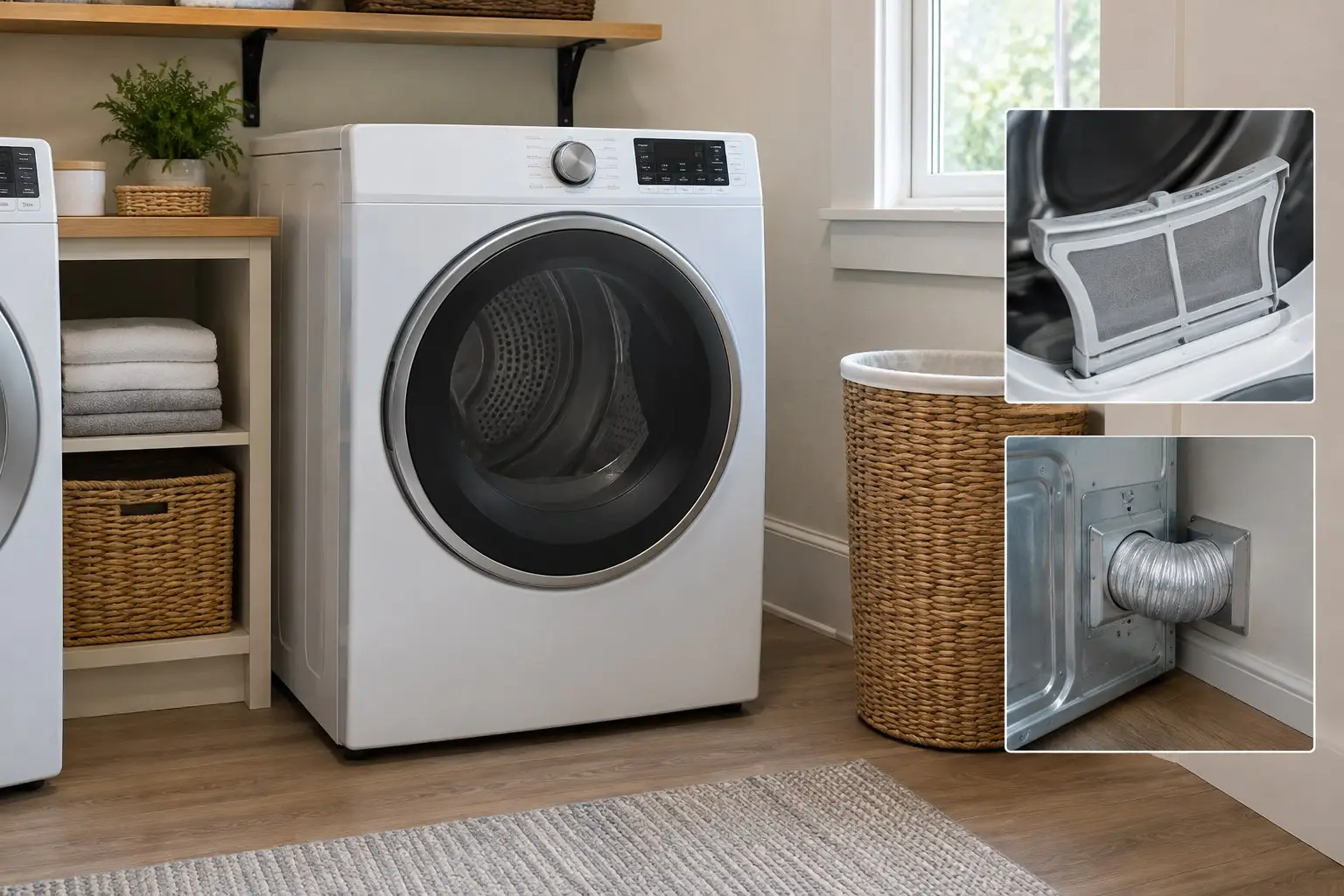
Airflow should be checked before assuming an internal component has failed. A clogged lint screen, crushed exhaust hose, blocked exterior vent, or heavy buildup inside the duct can prevent hot, moist air from leaving the dryer efficiently.
Restricted airflow can also cause the dryer to run hotter internally. Safety devices may interrupt the heating circuit when temperatures rise beyond their intended range. Replacing a thermal fuse without correcting the condition that caused it to open can result in another failure.
2. A tripped breaker or electrical supply problem
Most electric dryers use a 240-volt supply made from two hot legs. The motor can continue to run when one leg of the supply is lost, creating the confusing symptom of a dryer that tumbles normally but does not heat.
You can check the dryer breaker visually and reset it once if it has clearly tripped. If it trips again, do not repeatedly reset it. A recurring trip can indicate an electrical fault that needs qualified diagnosis.
3. Failed electric heating element
The heating element is a resistive coil that becomes hot when energized. Over time, the element can develop a break, sag into contact with surrounding metal, or fail electrically.
A visual inspection may reveal a broken coil, but a normal-looking element is not proof that it is good. Continuity and resistance testing requires the appliance to be safely disconnected and the correct model-specific access procedure. If you are not comfortable working around appliance wiring, this is a technician-level check.
4. Blown thermal fuse or failed thermostat
A thermal fuse is a safety device, not a normal operating control. If it opens, the heating circuit may stop. The important diagnostic question is why it opened. Airflow restriction and overheating are common reasons, but the exact cause depends on the dryer design.
Thermostats and thermistors regulate or report temperature. A failed temperature component can cause a dryer to heat incorrectly, cycle off too early, or produce unusual temperature behavior. Parts should be tested against the manufacturer’s specifications rather than replaced solely because the dryer is not heating.
5. Gas dryer igniter or valve problem
Gas dryers use a different heating path. The igniter must reach the correct operating condition so the gas valve system can open and establish the burner flame. A weak igniter, defective valve coils, flame-sensing problem, thermal fuse, or control issue can interrupt that sequence.
If a gas dryer smells of gas, stop using it. Do not attempt to adjust or bypass gas safety components. Gas-side diagnosis and repair should be handled by a qualified professional.
6. Control, wiring or sensor failure
Modern dryers use electronic controls, sensors, relays and wiring to coordinate the motor, heater and safety system. A damaged connector, failed relay or control-board fault can leave the motor operating while the heater remains off.
This is one reason replacing the most commonly blamed part first is poor diagnosis. A heating element can be perfectly good when the control circuit never supplies it with the required power.
Safe troubleshooting you can do before opening the dryer
- Confirm the cycle. Make sure the dryer is not set to Air Fluff, No Heat or another non-heated mode.
- Clean the lint screen. Remove visible lint and confirm the screen is seated correctly.
- Inspect the exhaust hose. Look for crushing, sharp bends or obvious disconnection.
- Check exterior airflow. If the dryer is running, the exterior vent should discharge air. Weak airflow deserves further investigation.
- Check the breaker once. For an electric dryer, a partial breaker trip can allow tumbling without heating. Do not repeatedly reset a breaker that trips again.
- Stop if there is burning odor, smoke, sparking, gas odor or abnormal heat. Those symptoms move the problem beyond routine homeowner troubleshooting.
Dryer not heating vs dryer not drying
These symptoms are related but not identical. A dryer can produce heat and still take too long because the exhaust system is restricted. Conversely, a dryer can have strong airflow but no heat because the heating circuit has failed.
| Symptom | What to investigate first |
|---|---|
| Clothes are cold and damp | Heating circuit, gas ignition or electrical supply |
| Clothes are warm but remain damp | Exhaust airflow, load size and moisture removal |
| Dryer overheats or shuts down | Vent restriction and temperature-control system |
| Dryer heats intermittently | Airflow, thermostat, thermal protection, igniter or control |
What not to do
- Do not bypass a thermal fuse, thermostat or other safety device.
- Do not operate a dryer with a visibly damaged exhaust system.
- Do not open a gas valve system without the required training.
- Do not repeatedly run a stalled or overheating dryer to see whether it starts heating again.
- Do not replace several parts at once without testing. That makes it harder to identify the actual failure.
Repair or replace the dryer?
A no-heat symptom by itself is not a reason to replace an otherwise sound dryer. A failed element, thermal fuse, thermostat, igniter or similar component may be repairable. Replacement becomes a stronger consideration when the appliance has multiple major failures, significant cabinet or drum damage, repeated breakdowns, or a repair that is not reasonable compared with the appliance’s condition.
The useful comparison is not simply the price of one part. Consider diagnosis, labor, parts availability, appliance age, previous repairs, condition of the drum and motor, and whether the dryer has an underlying airflow or electrical problem.
When professional dryer repair makes sense

Professional diagnosis makes sense when the basic airflow and setting checks are normal but the dryer still does not heat. It is also the safer choice when electrical measurements, internal disassembly, gas components, wiring, or repeated thermal-fuse failures are involved.
Knoxville Appliance Pros provides washer and dryer repair in Knoxville for heating, airflow, drainage, spin and related appliance problems. The goal of diagnosis is to identify the failed system before parts are replaced.
If a washer is also leaving clothes soaking wet because it will not drain, see why a washing machine may not drain after a cycle.
Frequently asked questions
Why is my dryer running but not getting hot?
The most likely areas are the heating circuit, electrical supply, thermal protection, airflow system or gas ignition system, depending on the dryer type.
Can a clogged vent make a dryer stop heating?
Yes. Severe airflow restriction can raise internal temperatures and cause safety components to interrupt heating. A vent restriction should be corrected rather than simply replacing the safety component.
Why does my electric dryer tumble but have no heat?
A partial loss of the 240-volt supply can allow the motor to run while the heating circuit remains inactive. Other possibilities include the element, thermal fuse, thermostat, wiring or controls.
Why does my dryer heat for a few minutes and then stop?
That pattern can point toward restricted airflow, overheating protection, thermostat behavior or another temperature-related fault. The exhaust system should be checked before assuming an internal component is defective.
Should I replace the thermal fuse if it is blown?
The fuse may need replacement, but the reason it opened should also be investigated. Replacing it without addressing an airflow or overheating problem can lead to another failure.
Can I diagnose a dryer heating element with a multimeter?
A continuity or resistance test can help diagnose an element, but the dryer must be safely disconnected and the correct test values depend on the model. Live electrical testing should be left to a qualified technician.
Bottom line
If a dryer is not heating, do not assume the heating element is automatically bad. Check the cycle, lint screen, exhaust airflow and electrical supply first. Then use the symptom pattern to separate an airflow problem from a heating-circuit or control failure. When internal electrical or gas diagnosis is required, testing the system is more reliable than replacing parts by guesswork.