The short answer
A smelly washing machine is almost always growing mildew and bacteria on a film of detergent residue. The film builds up in the door seal folds, the detergent drawer, the drain filter, and the outer drum where you cannot see it. Front loaders get it worst, because the door seal holds water and the door stays shut between loads. Too much detergent makes it worse, not better. Cold washes make it worse too, because they never get hot enough to clear the film. The routine below removes the smell at the source: clean the seal, the drawer, and the filter by hand, then run a hot empty cleaning cycle. If the smell is a sewage smell, read the drain sections carefully before you clean anything. Sewage odor can come from the house drain, not the washer, and no amount of drum cleaning fixes a drain problem. Persistent problems after a full clean are worth a look from a washer repair technician in Knoxville.
Smell type is your best clue. Musty and damp means mildew growth inside the machine. Sour means detergent residue and bacteria. Rotten egg or sewage means drain gas or standing dirty water. Burning is not a cleaning problem at all. A burning smell means stop the machine, unplug it, and read the safety section at the end of this article before you run it again.
Common causes and what each one looks like
| Cause | What you will notice | Safe check | DIY or call |
|---|---|---|---|
| Mildew in the door seal folds | Musty smell at the door, dark spots in the rubber folds | Pull the seal folds back and look and smell inside | DIY |
| Detergent and softener residue | Sour smell, slimy film in the drawer and drum | Remove the drawer and check for film and buildup | DIY |
| Clogged drain pump filter | Strong smell low on the machine, slow draining | Drain and clean the filter over a tray, per the manual | DIY |
| Residue on the outer drum | Smell returns days after cleaning the visible parts | Run a hot empty cycle with a washer cleaner and recheck | DIY, call if it returns fast |
| Standing water in the machine | Sewage like smell, water sitting in the drum or filter area | Check the filter area and watch a drain cycle | Call if it will not drain |
| House drain or standpipe problem | Rotten egg smell near the drain, worse when other drains run | Sniff the standpipe or nearby sink drain with the washer off | Call a plumber for the drain |
| Too much detergent habit | Film everywhere, clothes smell after washing | Cut detergent to the manual dose and run hot cycles | DIY |
The causes stack on each other. Residue feeds mildew. Mildew holds moisture. Moisture grows more mildew. That is why a spray of air freshener or a scented laundry product never fixes it. The smell is not in the air. It is in a layer of grime stuck to parts of the machine. Remove the layer and the smell goes. Leave the layer and scent the air, and the smell is back by the next load.
Step by step safe checks and cleaning routine
Do the hand cleaning first, then the hot cycle. The cycle works far better once the thick buildup is already off the seal and drawer. Unplug the washer or switch it off at the outlet before you clean the filter area.
Check 1: Clean out the door seal folds
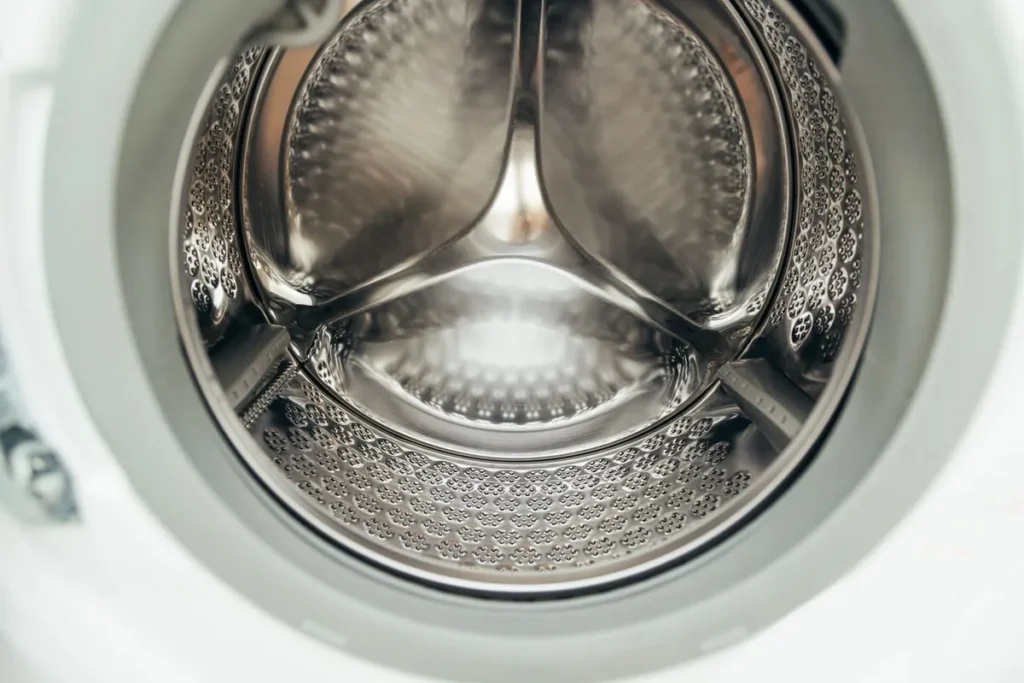
On a front loader, open the door and gently pull back the rubber seal so you can see into the folds. This is where water, lint, hair, and small items collect. You will often find a grey or black film, and sometimes coins or hair clips. Wipe the folds out with a cloth dampened with warm water and a small amount of white vinegar, or a dilute bleach solution if your manual allows it. Use an old toothbrush for the tight creases. Then dry the folds with a clean towel. Drying matters. A seal wiped clean and left wet starts growing again the same day. On a top loader there is no door seal, but wipe under the rim of the tub and around the lid area, where the same film builds up out of sight.
Check 2: Remove and scrub the detergent drawer
Pull the detergent drawer out fully. Most drawers have a release tab at the back. Soak the drawer in warm soapy water in the sink and scrub every compartment, including the softener section, which grows a waxy film fastest. Then scrub the housing the drawer slides into. Shine a light in there. The top of that housing often has a mat of residue and mildew that drips onto clean laundry. Rinse the drawer, dry it, and slide it back. If you use pods dropped straight into the drum, check the drawer anyway. Softener and liquid detergent users leave the most behind, but powder residue builds up in the housing too.
Check 3: Drain and clean the pump filter
Many front loaders have a small access flap at the bottom front. Behind it sits the drain pump filter, and it holds standing water and trapped debris. Put a shallow tray and old towels under the flap first. Open it slowly. Use the small drain hose if your model has one, and let the water out into the tray before you unscrew the filter. Expect lint, coins, hair, and a strong smell. Rinse the filter under the tap, wipe the housing, and screw the filter back in fully and straight. A filter left loose or cross threaded leaks, so take care here. Not every model has an owner accessible filter. If your manual does not show one, skip this step rather than forcing a panel. Washer drain trouble is covered in more depth in our guide to a washing machine not draining.
Check 4: Run a hot empty cleaning cycle
With the machine empty, run the hottest and longest cycle it offers. Many washers have a tub clean or self clean cycle. Use it. Add a washing machine cleaner product made for this job, or follow your manual guidance for a hot cycle with white vinegar in the drum. Do not mix vinegar and bleach in the same cycle, ever. Pick one approach per the manual. When the cycle ends, open the door and wipe the seal and door glass again, because the cycle loosens film that ends up there. Leave the door open afterwards so the drum dries in moving air instead of sealing in damp.
Check 5: Check the drain before you blame the machine again
If the smell is a sewage or rotten egg smell, do this check before repeating any cleaning. With the washer off and empty, smell near the drain standpipe behind the machine and near the nearest sink drain. If the smell is there with the washer idle, the odor is coming from the house drain, not the washer. Causes include a drain trap that has dried out, a standpipe issue, or a partial blockage backing gas up the line. Running water through nearby drains can refill a dry trap. A smell that stays, or drains that gurgle and run slow around the house, is a plumbing problem. A washer technician cannot fix the house drain, and a plumber cannot fix a mildewed washer, so this distinction saves you a wrong call.
Check 6: Fix the habits that grow the smell
Once the machine is clean, keep it clean with four habits. First, dose detergent by the manual, not by the cap. High efficiency machines need far less than most people pour, and the excess becomes the film you just scrubbed off. Second, leave the door and the drawer cracked open between washes so the machine dries out. Third, take finished loads out promptly instead of leaving wet laundry sitting in a closed drum. Fourth, run a hot wash or a cleaning cycle about once a month, more often if most of your loads are cold. These habits cost nothing and they are the difference between cleaning the washer twice a year and cleaning it every few years.
What a technician does
If a full clean and a week of better habits do not hold, a technician looks where you cannot reach. The main hidden area is the space between the inner drum you see and the outer tub you do not. Heavy residue there can need the machine opened up and cleaned or flushed properly. The technician also checks the drain pump and hoses for a partial blockage holding dirty water, checks the inlet screens and hoses for growth on well water systems, and inspects the door seal for damage. A seal that is torn or deeply stained into the rubber sometimes needs replacing, because mildew rooted in cracked rubber does not scrub out. If the washer also drains slowly, vibrates hard, or shows error codes, those faults get tested on the same visit. Tell us which smell you have, musty, sour, sewage, or burning. That one word routes the whole diagnosis.
What it costs
The cleaning routine in this article costs a few dollars in supplies. If you need a technician, published national ranges put a diagnostic visit roughly in the $75 to $150 area. Common washer repairs that come out of a smell complaint, like a drain pump replacement, often land in the $200 to $450 range, and a front load door seal replacement commonly falls around $250 to $500 depending on the model. These are national published ranges for planning, not a quote for your machine. Your cost is confirmed after diagnosis, before any work begins. Our appliance repair cost guide for Knoxville shows the ranges and helps you weigh repair against the age of the machine.
When to stop DIY and call
Call rather than clean if any of these apply:
- A burning or electrical smell at any point. Stop the cycle, unplug the washer, and do not run it again until it is checked.
- A sewage smell that an earlier check traced to the machine itself, with water standing in the drum or the machine draining slowly.
- The smell returns within a week of a full seal, drawer, and filter clean plus a hot cycle. Fast return means buildup or standing water you cannot reach.
- Water leaks from the filter housing or under the machine after cleaning.
- The washer shows error codes, will not finish cycles, or leaves clothes soaking wet.
- The door seal is torn, cracked, or stained deep into the rubber.
Stop immediately if you find water pooling near the power cord or outlet. Water and electricity together are never a wait and see situation. Turn off power at the breaker if the outlet area is wet.
Frequently asked questions
Why does my front loader smell worse than my old top loader did?
The front load door seals against water with a rubber gasket, and that gasket holds moisture in its folds after every cycle. The door also stays shut to save space in most laundry rooms, which seals the damp in. Top loaders vent through the lid gap and dry out more easily. The fix is the same routine: clean the folds, dry them, and leave the door cracked open.
Will vinegar damage my washing machine?
Used now and then in a hot rinse cycle, white vinegar is a common home cleaning step and is listed in many care guides. Do not pour it in with bleach, and do not use it as a daily detergent substitute. If your manual warns against it for your model, follow the manual and use a washer cleaner product instead.
How much detergent should I actually use?
Less than the cap suggests for most loads. High efficiency machines often need only a small measured dose, and the manual gives the amount for your water conditions. Overdosing is the top cause of residue film. If your clothes come out feeling slick or the drum smells sour, cut the dose and run a hot empty cycle.
The smell is only in my clothes, not the machine. Why?
Clothes pick up the odor growing inside the machine, especially towels and gym gear that hold moisture. Wash a test load right after the full cleaning routine. If the test load smells clean, the machine was the source. If the clothes still smell, check that loads are not sitting wet in the drum for hours after the cycle ends.
How often should I run a cleaning cycle?
About once a month is a good rhythm for most homes, and the tub clean cycle exists for exactly this. Homes that wash mostly in cold water, use heavy softener, or keep the door shut between loads may need it more often. Mark it on the same day you change other household filters so it does not get forgotten.
Still smells after a full clean?
If you have scrubbed the seal, the drawer, and the filter and run the hot cycle, and the smell is still there or comes back in days, the buildup is somewhere you cannot reach. Call Knoxville Appliance Pros at +1 865-290-1860, Monday to Saturday, 7:00 AM to 7:00 PM, closed Sunday. Tell us the type of smell and what you have already cleaned, and we will check the rest of the machine.
Sources: manufacturer care and cleaning guidance for front load and top load washers, including door seal, dispenser, and filter maintenance; national published appliance repair cost ranges. Costs are confirmed after diagnosis.